AI VAYU is an advanced environmental monitoring and early warning system designed to detect, analyze, and respond to atmospheric and climate-related risks in real time. By combining AI analytics, weather intelligence, smoke detection, and geospatial monitoring, AI VAYU enhances disaster preparedness, sustainability efforts, and community safety.
The system delivers predictive insights, automated alerts, and centralized dashboards that empower authorities, disaster management teams, and environmental agencies to take proactive action before risks escalate.
Introduction
AI VAYU's EWEM platform leverages artificial intelligence, meteorological data, and IoT-enabled sensors to track environmental changes with high precision. It strengthens resilience by enabling instant notifications and GPS-based emergency coordination for rapid disaster response.
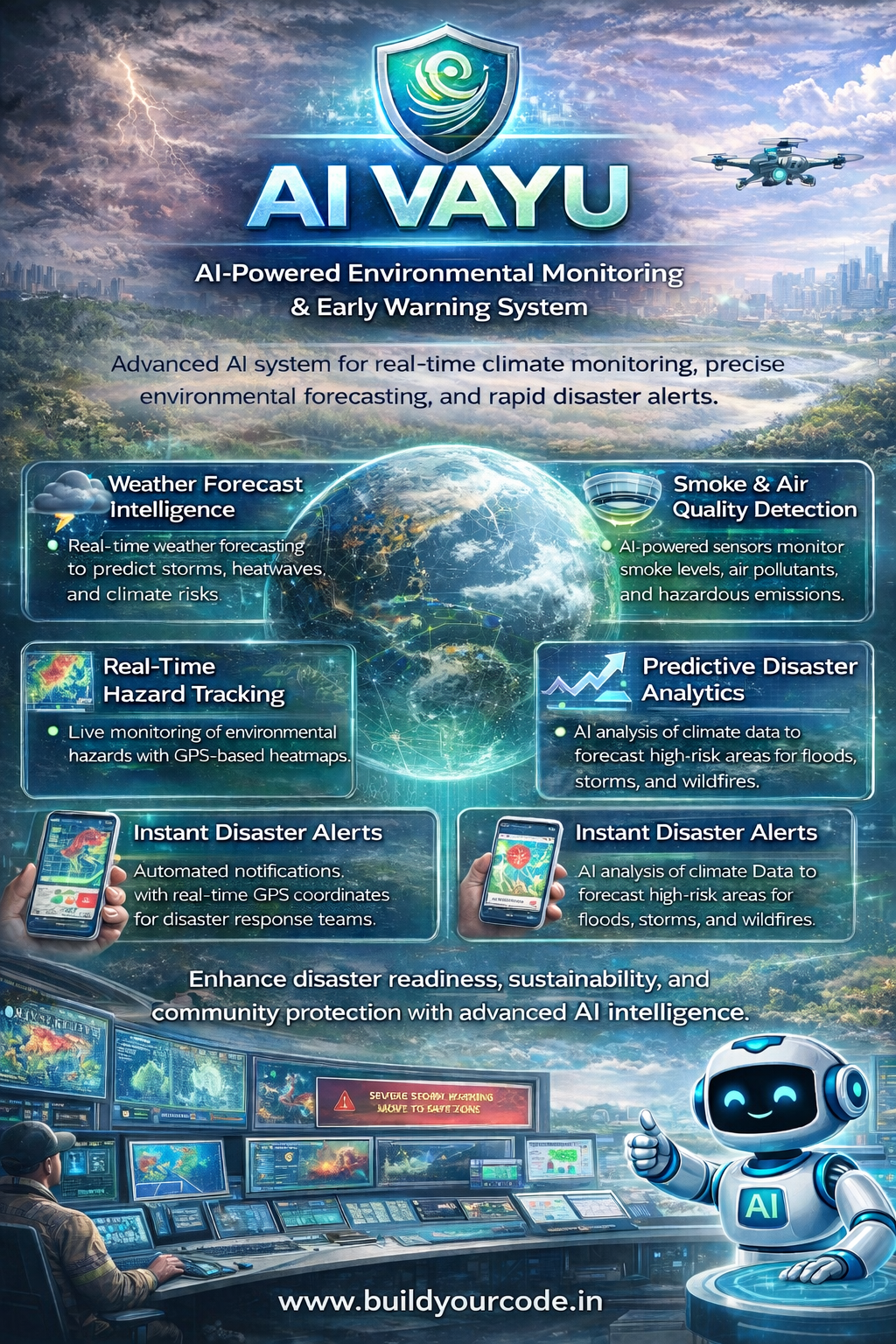
AI-Powered Weather Forecast Intelligence leverages real-time meteorological data, satellite imagery, and atmospheric analytics to accurately predict storms, heatwaves, heavy rainfall, and climate irregularities. The system enables proactive planning, disaster preparedness, and risk mitigation through intelligent forecasting models and live monitoring dashboards.

Real-Time Atmospheric Monitoring: Continuously track temperature, humidity, wind speed, pressure systems, and cloud movement using IoT weather stations and satellite integrations.
AI-Based Storm & Heatwave Prediction: Utilize machine learning algorithms to analyze historical and live weather data to forecast cyclones, extreme heatwaves, and severe climate patterns.
Heavy Rainfall & Flood Risk Alerts: Predict heavy precipitation and potential flooding zones with early warning notifications to support preventive action.
Climate Pattern Analysis & Trends: Detect long-term climate irregularities and seasonal deviations using advanced data modeling and predictive analytics.
Automated Weather Alerts & Notifications: Instantly notify authorities and stakeholders via SMS, email, mobile apps, and dashboards for rapid response and preparedness.
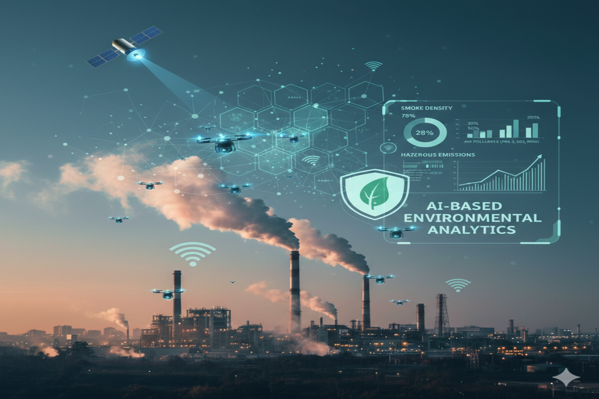
AI-Based Smoke & Air Quality Detection leverages intelligent environmental monitoring systems to detect smoke density, air pollutants, and hazardous emissions in real time using AI-driven sensors and satellite-integrated analytics.
Real-Time Smoke Detection: Continuously monitor smoke levels and airborne particulate matter using AI-enhanced environmental sensors.
Air Pollutant Analysis: Track and analyze harmful pollutants such as COâ‚‚, CO, NOx, PM2.5, and PM10 with machine learning-based accuracy.
Satellite & IoT Integration: Combine satellite imagery with ground-level IoT sensor networks to detect large-scale environmental risks.
Hazardous Emission Monitoring: Identify toxic gas leaks and industrial emissions before they reach critical levels.
Live Environmental Dashboard: Provide centralized monitoring through real-time dashboards with air quality indexes, heatmaps, and alert indicators.
Automated Alert System: Trigger instant notifications to authorities and safety teams when pollutant thresholds exceed safe limits.
Real-Time Environmental Risk Monitoring enables continuous tracking of environmental hazards using AI-powered analytics, live dashboards, and intelligent anomaly detection systems to ensure proactive risk mitigation and safety compliance.
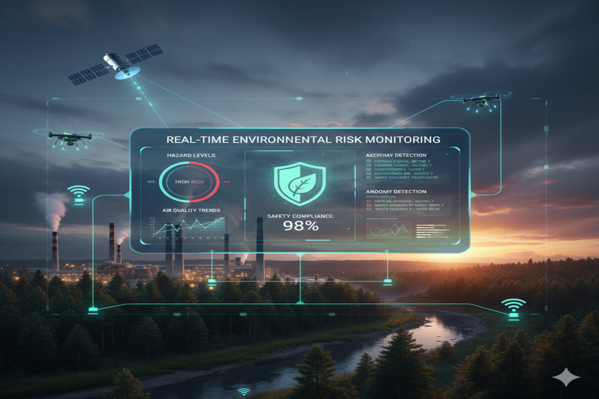
Live Environmental Data Tracking: Continuously monitor temperature, humidity, air quality, gas levels, and other environmental indicators in real time.
Interactive Heatmap Visualization: Display high-risk zones and environmental intensity levels through dynamic heatmaps for quick decision-making.
Trend & Pattern Analytics: Analyze historical and live data trends to identify gradual environmental changes and risk patterns.
AI-Based Anomaly Detection: Automatically detect abnormal environmental fluctuations and unusual hazard signals using machine learning algorithms.
Centralized Monitoring Dashboard: Provide a unified control panel with visual graphs, alerts, performance metrics, and status indicators.
Instant Risk Alerts & Notifications: Trigger real-time alerts when environmental thresholds exceed predefined safety limits.
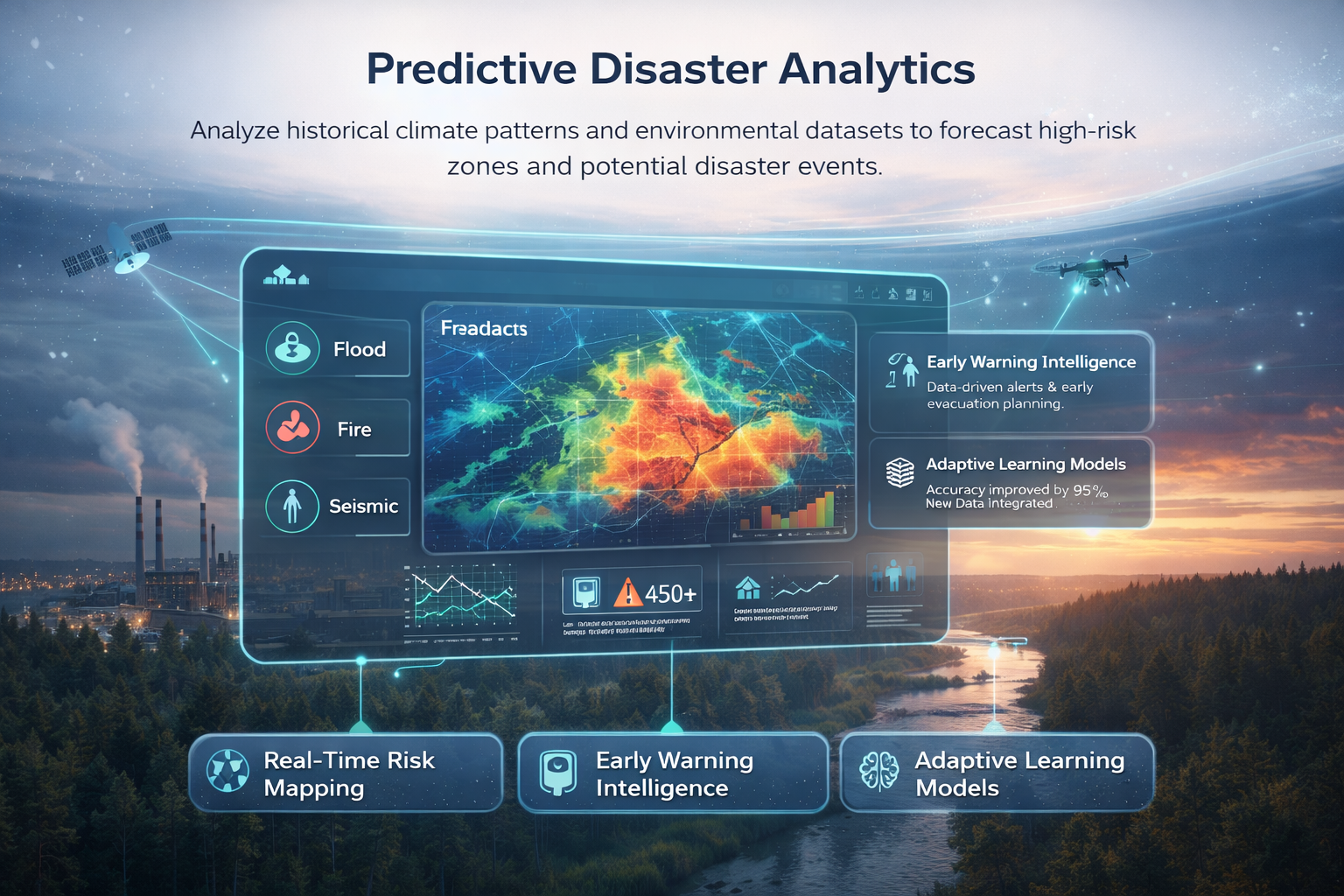
Leverage advanced AI models to analyze historical climate patterns, satellite imagery, seismic activity records, hydrological data, and environmental datasets to accurately forecast high-risk zones and potential disaster events. The system identifies emerging risk patterns, enabling authorities and organizations to take proactive preventive measures, allocate resources efficiently, and strengthen disaster preparedness strategies before incidents escalate.
Real-Time Risk Mapping: Generate dynamic geospatial heatmaps highlighting flood-prone areas, wildfire-sensitive regions, seismic vulnerability zones, and extreme weather impact corridors.
Early Warning Intelligence: Deliver data-driven alerts based on anomaly detection and predictive modeling to support early evacuation planning and emergency response coordination.
Adaptive Learning Models: Continuously improve prediction accuracy by integrating new climate data, environmental trends, and historical disaster outcomes through machine learning algorithms.
Automatically dispatch real-time SMS alerts, mobile app push notifications, and centralized control room warnings embedded with precise GPS coordinates. This ensures disaster response teams receive immediate, location-accurate intelligence for faster mobilization and coordinated action.
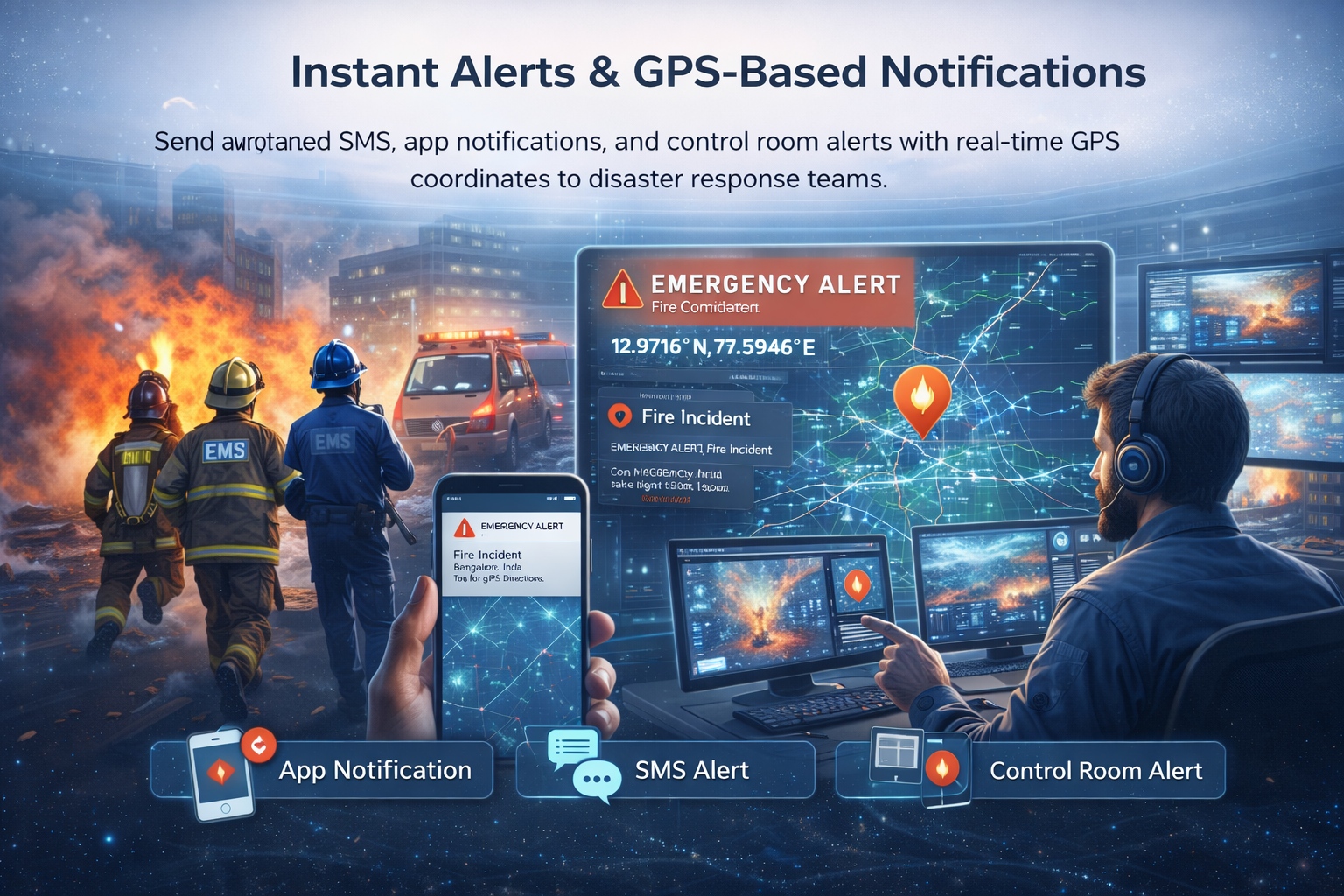
Multi-Channel Emergency Communication: Deliver synchronized alerts across SMS, mobile applications, email, and command center dashboards to guarantee message redundancy and uninterrupted communication.
Live GPS Incident Tracking: Transmit exact latitude and longitude data with dynamic map integration, enabling responders to navigate directly to the affected location without delays.
Control Room Command Visibility: Provide centralized monitoring dashboards displaying incident severity levels, geospatial mapping, live status updates, and response team coordination in real time.
Rapid Response Coordination: Enable automated escalation protocols that notify relevant authorities, emergency services, and internal safety teams simultaneously to reduce response time.
Incident Status Updates: Continuously update stakeholders with real-time progress reports, containment status, and resolution confirmations through automated notification workflows.
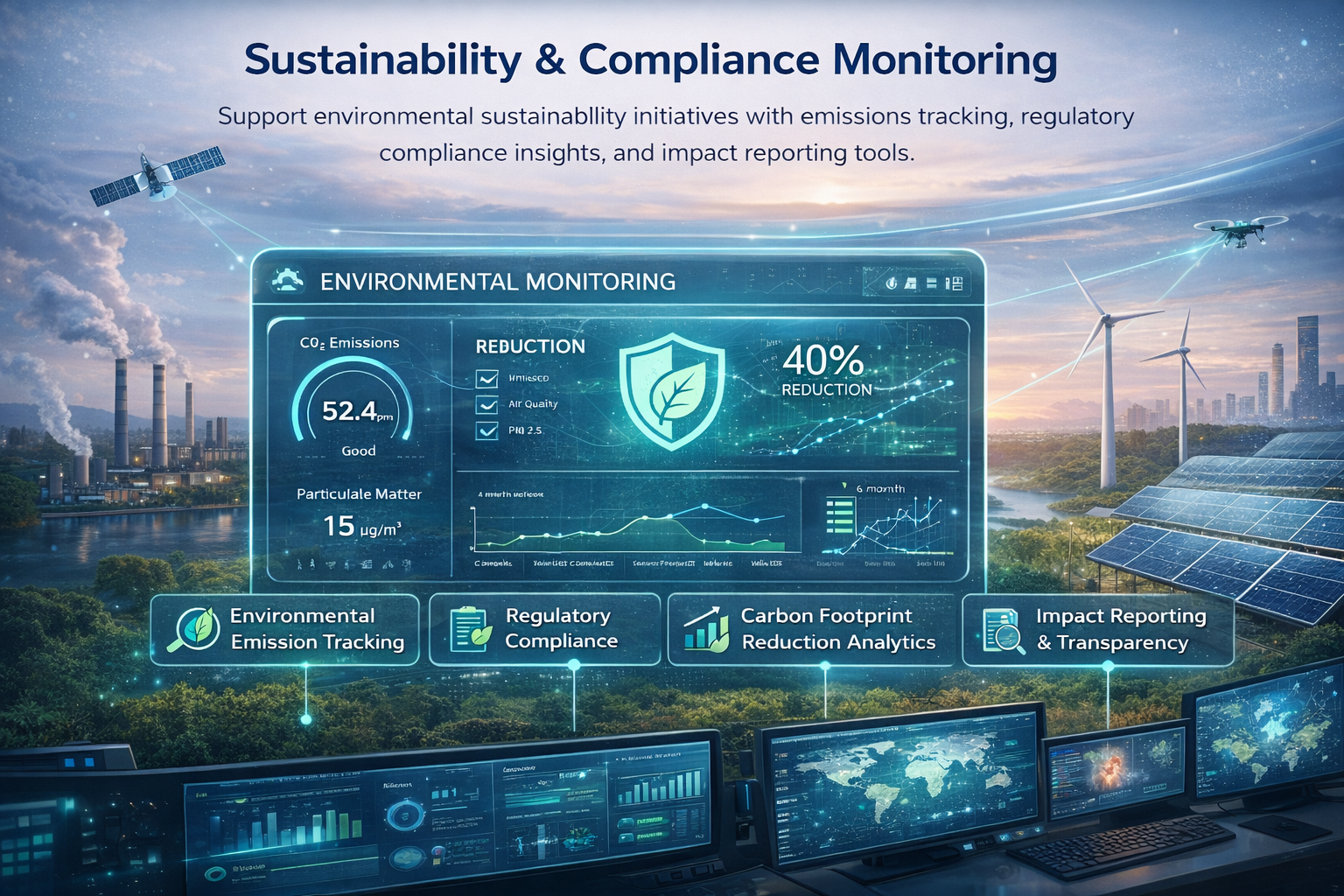
Sustainability & Compliance Monitoring enables organizations to align with environmental standards by tracking emissions, ensuring regulatory compliance, and delivering actionable sustainability insights through AI-driven analytics and reporting systems.
Emissions Tracking & Analysis: Continuously monitor carbon emissions, greenhouse gases (GHGs), and industrial discharge levels using real-time sensor data and AI analytics.
Regulatory Compliance Monitoring: Ensure adherence to environmental regulations and standards through automated compliance checks and threshold monitoring.
Carbon Footprint Assessment: Measure and evaluate organizational carbon footprint with detailed breakdowns across operations, facilities, and supply chains.
Sustainability Performance Dashboards: Provide centralized dashboards displaying emission trends, compliance status, environmental KPIs, and improvement metrics.
Automated Compliance Reporting: Generate audit-ready environmental reports with historical data analysis and regulatory documentation support.
Impact & Risk Forecasting: Use predictive analytics to assess long-term environmental impact and identify potential sustainability risks before escalation.
Alert & Notification System: Trigger alerts when emission levels exceed permitted limits or when compliance deviations are detected.